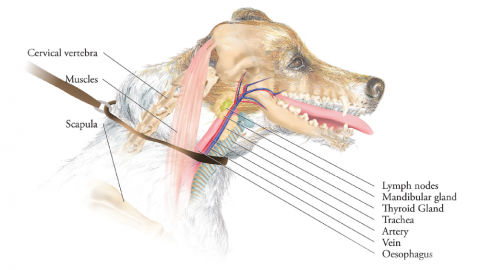
The area around a dog’s throat is one of the most vulnerable parts of their body. Research finds that when a dog pulls, or the leash is jerked, the pressure exerted on a dog’s neck by a flat collar is enough to risk damage to the dog’s neck.
Collars should only be used to display ID tags, not for restraint or control. Harnesses are a better option to control your dog safely.
Slip and prong collars can cause injury to your dog’s neck and spine. Even when used correctly, these collars work by causing pain.
Prong collars, shock/E-collars, and choke chains also have long-term adverse behavioral effects, including problems with aggression, anxiety, and fear.
Safer Options
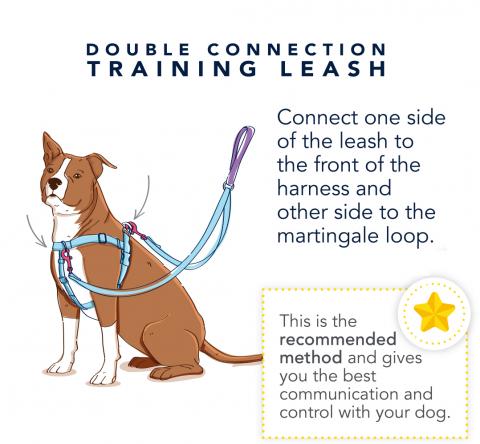
There are comfortable harnesses available that make walking your dog easier. Harnesses with a leash attachment at the dog’s chest and back help reduce pulling (like the Freedom No-Pull Harness).
Our staff is happy to show you how to fit and use a new Freedom Harness.
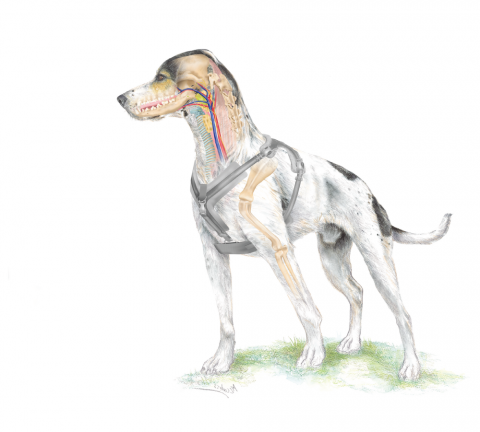
* Please note, some front-clip harnesses restrict movement to keep the dog from pulling, but those are meant for short-term management while you are working on training your dog to walk on a loose leash. A Y-shaped harness such as the Perfect Fit harness shown in the illustration below, is a better solution for long-term use as it allows the dog to move freely.
Training
Once you have the right equipment, your dog can practice walking on a loose leash. If you make it rewarding for your dog to remain near your side, you will notice that your walks go more smoothly.
Early every spring, our phones start ringing off the hook with calls from concerned citizens wondering what they should do with the kittens they found outdoors.
What is “Kitten Season”? After the dark, cold winter, we excitedly anticipate the warmer Spring weather and its delightful scent of blossoms and grass. However, ask any animal welfare volunteer or employee what Spring season means to them, and they may respond with a term describing the growth of something other than flowers.
“Kitten Season” refers to the period when litters of kittens are born, generally beginning with the warmer weather and potentially lasting until the end of the year. Each year, thousands of kittens are brought to shelters and rescue groups across the state! While newborn kittens are adorable and it can be tempting to pick up small kittens you might find outside, these fragile babies do best with their mother raising them, and it can be a deadly mistake to take kittens away prematurely.
What to do if you find kittens outdoors:
Are the kittens clean and quiet or sleeping?
If yes, a mom is likely caring for them, and you should leave them alone.
The mom may be out searching for food or in the process of moving them to a different location.
The mom may not return if she senses a human near her nest.
Once kittens are weaned, around 4-6 weeks of age, contact your local animal control services to ask about trapping mom and her kittens to all be spayed/neutered.
Kittens can have surgery once they are two months old and weigh at least two pounds.
A mom cat can become pregnant even while still nursing!
If you are unsure if the mom is around, here is a trick. Create a large circle around the area with flour and leave. Return after a couple of hours to check for paw prints in the flour and reassess the kittens’ condition. If you determine that the mom is caring for her kittens and the area is safe, you may provide shelter and regular food for the mom, but keep the food at a distance from the nest. The mother may not accept your shelter if food is nearby because she might fear it will attract other unwelcome cats to her location.
Are the kittens dirty, crying and cold?
Neonatal kittens are more at risk of hypothermia than they are of starvation. It is safer to wait and see if a mom returns in warmer weather than in colder temperatures.
If you determine that they appear neglected, hungry or in immediate danger, it is important to take action fast.
Are you prepared to bottle feed and care for them until they are old enough to be spayed/neutered and adopted? If so, contact ourFoster Care Department for information and resources.
HSU receives kittens with and without their mom nearly every day during Kitten Season. We are usually in need of dependable foster care volunteers willing to open up their homes to help with precious litters of bottle-feeding orphans and other kittens who still have their mom. Are you willing to bottle feed, wean, socialize and provide medical care to ensure each kitten can find a home of his or her own? If you said yes, then you can become a life-saver. Click to read more about becoming a Foster Volunteer.
We hope this article helps you know what to do when you find kittens. If you have any questions, contact your local municipal animal control shelter.
Pets provide companionship and fun, but for some people, a dog or cat can also trigger sneezing, sniffles, and worse. This may start a search for a “hypoallergenic” pet.